
On Apr. 16, “Tomodachi Life: Living the Dream” released for the Nintendo Switch and Switch 2, making it the third entry in the line of Tomodachi games.
The game falls under the life simulation genre and features customizable avatars called Miis, which were added so that players could represent themselves or others. Miis are a built-in feature of several Nintendo consoles, and feature as playable characters in games such as “Mario Kart” releases and “Wii Sports.”
Franchises such as “Tomodachi Life” and “Miitopia” revolve entirely around Miis, taking them beyond their original purpose and giving Mii characters their own personalities.
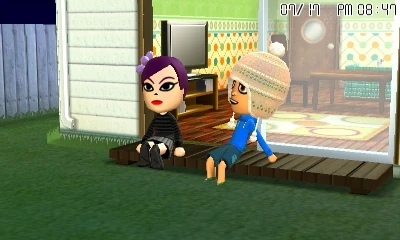
In Tomodachi games, you, the player, are in charge of an island populated by the Miis you create. Each island resident can be given food, new clothes, and home decor, which they can react positively or negatively to.
Context
The series started in 2009 with the Japan-exclusive “Tomodachi Collection” for the Nintendo DS, and from 2013 to 2014 “Tomodachi Life” on the 3DS was released worldwide, becoming one of the best-selling games on the console.
A sequel to “Tomodachi Life” for the Switch has been a topic of discussion and debate among fans for several years, until Nintendo announced “Tomodachi Life: Living the Dream” in the final direct for upcoming games on the Switch.
Gameplay

Much of the gameplay is taking care of Miis, who can request food, clothing, home interiors, etc. and ask the player for input on their relationships with other Miis—including friendships, dates, marriages, arguments, and the recent addition of roommates.
Like the previous 3DS Tomodachi game, “Living the Dream” is better suited for short playing sessions on a regular basis since it progresses slowly. Several parts of the game follow real-world time, including the availability of new food and clothes on a daily basis and new home decor on a weekly basis.
Still, it is significantly more engaging than its 3DS counterpart since the player can now initiate interactions between Miis by picking them up and dragging them over to other island residents. Arguably, some of the most dramatic and entertaining moments in Tomodachi games come from romance events, which I found to be faster paced for some Miis compared to the at times excruciating wait for a love event to trigger on the 3DS edition.
Even during uneventful periods of gameplay, the ability to create food, clothing, pets, island decor, and several other in-game items is another new feature that helps to keep the game enjoyable despite its slow progression.
“Living the Dream” offers a more personalized experience in general with new features such as “Little quirks,” which offer more options for a Mii’s body language, facial expressions, and even their appetite; introducing certain words and phrases that Miis will bring up in conversations, and the ability to change the layout of and furnish the island (which before, could not be edited at all). The addition of different orientations has been a highly speculated feature, and I was surprised to see how flexible the options were for gender and sexuality. Another small win for customization, in my opinion, is the wider range of colors for Miis. In the past, Miis were only limited to a small set of natural hair and eye colors, and the player would have to spend time obtaining hair dye for any color outside of the 8 shades initially available. This problem is now nonexistent with the large variety of hair and eye colors that are already accessible.

Major Differences
“Tomodachi Life” had a distinct style of clashing 3D models and characters with flat, real-world pictures for most items in the game and offered bizarre, very unserious experiences. Living the Dream kept a lot of the charm and weirdness of the previous game, which I was very happy to see.
Some parts of the 3DS game did not make it to the Switch, though. Ranking Boards, which measured factors like popularity and charm; the Concert Hall, where Miis could perform songs; Judgement Bay, where the player could make islanders vote between 2-4 choices, and daily rap battles were fun activities that are currently not featured in “Living the Dream.” Out of all of these, the Concert Hall is most definitely deserving of a return to the game as it was a staple of the previous “Tomodachi Life” that was loved by many players.
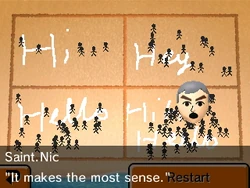
The proposal minigame from the 3DS, where the player gives a Mii queues for the right time to propose to their partner was completely replaced by a minigame where the player has to fight and dodge distracting thoughts for the Mii that plans to propose. I found that this was a very different, but equally high-stakes experience that was more intense and fast-paced compared to before.
Marriage in “Living the Dream” was also a little lacking. In the 3DS game, married Miis shared a bedroom and could be observed doing daily routines together, which was lost in the Switch edition since couples have separate rooms and share the home in pretty much the same way that regular roomates do. Baby Miis now instantly grow up in a single cutscene, another major cut to the game’s content of married life. Before, they took multiple real-life days to grow up, during which the couple sometimes called over the player to help take care of the baby. As a whole, the loss of these features take away from the main point of the game—to observe and engage with the daily lives of Miis.
Is it worth buying?
As someone who has played both “Tomodachi Life” for the 3DS and “Tomodachi Life: Living the Dream” on the Switch, I believe that the level of customization and flexibility in “Living the Dream” outweighs the loss of certain features from its predecessor. While “Living the Dream” is on the more expensive side like most Switch titles, it’s a great game that, with patience, anyone can enjoy regardless of whether or not they’re new to this series.